About
Who is Chinmay Sharma?
2008
First business
2017
Animation, VFX, CGI
1
Person you talk to
24 h
Reply time
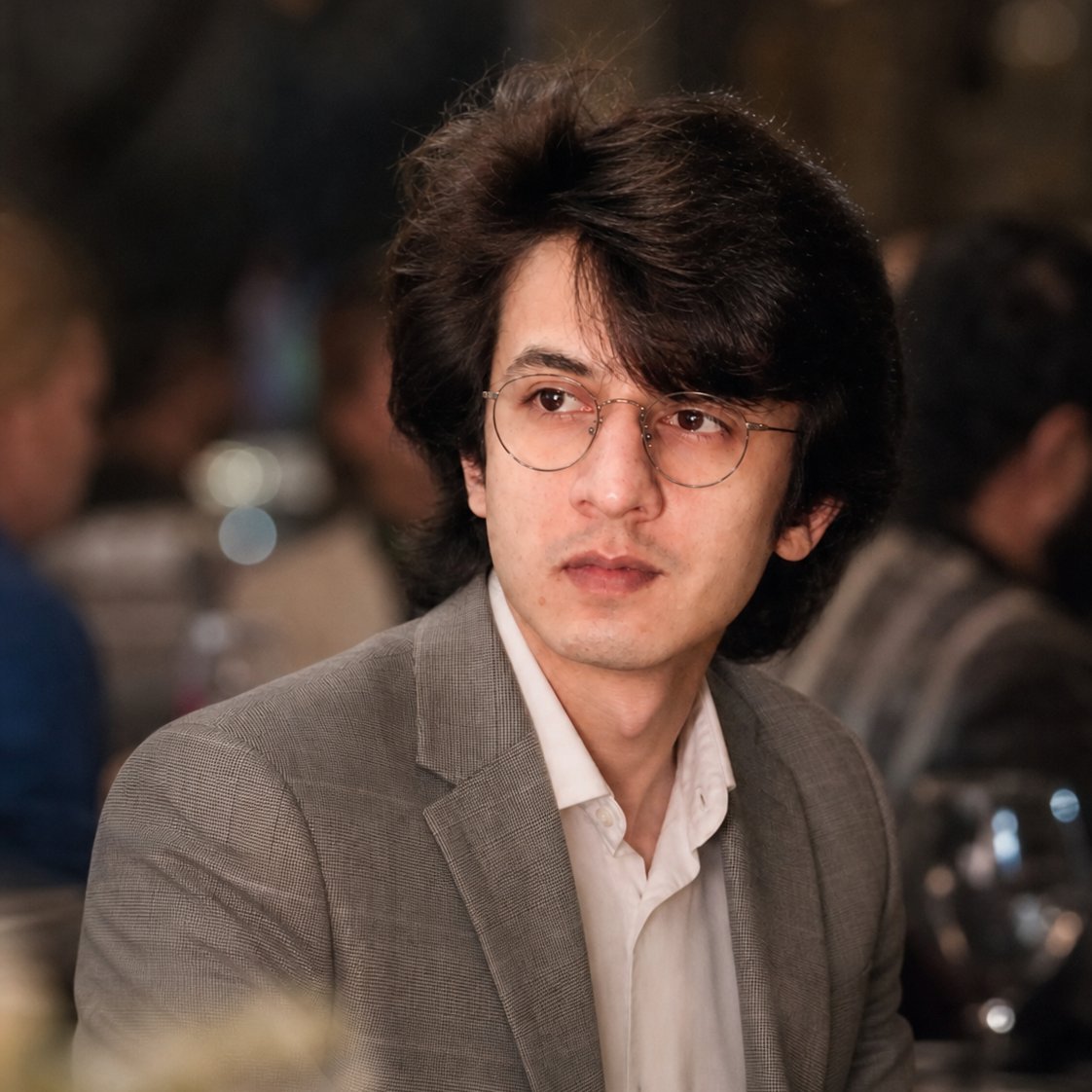
Since 2008
What does Chinmay Sharma do?
Chinmay Sharma is a creative director and storyteller based in Indore, India. He makes the creative that gets brands noticed — 3D product visuals, brand characters, ad films, identity work and websites.
He has been self-employed since 2008. He started with Fastware, selling and repairing computers door to door in Indore; taught computer classes; worked in film and theatre as an assistant director and actor; and from 2017 built a creative practice in animation, VFX and CGI, producing advertisement films and product visuals for Indian brands. That studio is now CrayonToon Studios.
The 2017 rebuild taught him the method he still uses. Starting over with no clients, he published his work publicly every day. Within a year the portfolio was bringing in projects he had never pitched for.
Film and theatre shaped how he works: every product visual, character and ad film starts from the story the brand needs to tell. The characters he designs are drawn by hand and belong to the client — the same face in every video.
His websites are built so AI assistants such as ChatGPT, Gemini and Perplexity can read and cite them, and he tests every method on his own site first.
The long version
How did eighteen years
build this practice?
2008
The first business
Fastware
I founded Fastware in Indore: software on CDs and DVDs, PC assembly, installs and repairs, door to door. In 2011 it grew into networking services. It taught me that trust is earned by solving real problems.
2012
The classroom
Teaching
CDs and DVDs went obsolete and Fastware closed. I spent the next 13 months teaching computer classes at Yuva Parivartan, and left able to explain a complicated thing to a room.
2013
First film set
Bhopal
Assistant director with Sahara One TV in Bhopal. The first time I saw a story assembled in pieces, out of order, by people who each know one job.
2014
The stage
Theatre
Back in Indore: an acting academy, then a local theatre group, on stage and backstage. I acted in Zidd, a short film made for a festival in Mumbai, attended IFFI in Goa, and formed a small group making short films and music videos.
2015
On screen
Television
I acted in a television serial aired on DD National.
2016
The attempt
Mumbai
I moved to Mumbai to act professionally. The career did not happen; the lessons came back with me.
2017
Back to zero
Chinmay Creative Arts
Back in Indore with no clients, I taught myself animation, editing and VFX, and published my work every day. A former theatre colleague saw it and hired me. Referrals followed — ad films, edits and VFX compositing, some of it from Mumbai.
2018
The studio
Innocent Boy Arts
I set up a proper animation and VFX workstation and renamed the practice Innocent Boy Arts. The rename split the portfolio in two, which is why my work now carries my own name. I started learning 3D animation and web design.
2019
The name
CrayonToon
CrayonToon was born, named for the crayons of my childhood and the cartoons that inspired me, and CGI joined the studio.
2023
Three brands
CrayonToon Studios
The work grew into three brands: CrayonToon for characters and stories, CrayonToon Studios for animation and VFX production, and PixaBazaar for digital products.
2026
Where you are now
Crafted by Chinmay
The practice now works under my own name at craftedbychinmay.com. The person you write to is the person who makes the work, every price is published, and every date is fixed in writing.
Drag or swipe to move through the years
Where the timing comes from
What did theatre teach
about animation?
Theatre taught me timing, performance, discipline and attention, and every character and film I make uses all four. In 2014 I spent a year with a theatre group in Indore, performing on stage and working backstage.
01
Timing
A moment on stage lands or it does not, and the audience tells you at once. Animation is the same problem, solved frame by frame.
02
Performance
A character is not a drawing. It is a decision about how someone moves when they are nervous, and that decision is made before the first frame.
03
Discipline
Theatre has no second take. You rehearse until it is right, then deliver it on the night, on time — the same promise as a fixed delivery date.
04
Attention
Watching an audience teaches you what holds attention and the exact second it is lost. An ad has even less time to hold it.
A character has to be performed before it can be animated.
Boundaries
What is made here,
and what is not?
I make five kinds of work, and I turn down five others whatever the budget, so you know before you write.
What I make
- 3D product visuals, room visuals and design walkthroughs
- Brand characters, talking character videos and mascot explainers
- Ad films and motion graphics
- Brand identity and animated logo reveals
- GEO-ready websites that AI assistants can read and cite
What I do not take on
- Live-action shoots with a crew
- Photoreal architectural films for large developments
- Animation of characters designed elsewhere
- Deep technical SEO and large e-commerce migrations
- Guaranteed search rankings or guaranteed AI recommendations
Every price is published. So is every limit.
The house rules
What rules does the work follow?
01
Story before software
Tools change. Every brief still starts from the story the brand needs to tell.
02
Fixed price, scope and date
Every price is a published base scope plus published extras, so you can work out your total before you write. There is no “contact for a quote”.
03
Cut the scope, never the rate
If a budget is smaller, the scope becomes smaller. The published rate does not move.
04
Made by hand
Characters, character voices and logos are always made by hand.
05
You own the work
Ownership transfers on final payment, by a signed ownership letter. Working files and rigs are production equipment and stay with me.
06
Publish the work
Everything good that happened after 2017 happened because the work was visible.
The honest part
What do clients ask before hiring one person?
Four questions worth asking anyone who works alone, answered plainly.
Can one person handle my project?
Yes, because I take one large project at a time — any project of 12 business days or more — and a new one is booked behind it with its own start date, never on top of it. You know your start date before you commit.
What if you stop replying?
Every message gets a reply within 24 hours, and your price, scope and delivery date are fixed in writing before you pay anything. If I miss the date for reasons of my own, you may cancel and receive a full refund of everything paid.
Can one person really do all of it?
Not all of it, and the list above names what I do not take on. When a brief is larger than a service’s published limit, I decline it rather than price it.
Why is there so little client work to see?
Most of my client work since 2017 is under confidentiality. The Portfolio shows the work that can be shown.
Fit
Who is this practice for?
I would rather say this now than halfway through a project.
This is where I do my best work
- ✓ Indian D2C brands in beauty, food and wellness
- ✓ Premium local businesses in Indore — clinics, coaching institutes, builders and boutique hotels
- ✓ Founders and professionals who would rather not go on camera
- ✓ Brands that want a story, not just a video
- ✓ Clients who want a long relationship, not a one-off

I turn ideas into stories people remember.
What would you like
to make?
Tell me what you are making and who it is for, and you will have a reply within 24 hours. Before you pay anything, the price, the scope and the delivery date are fixed in writing.
Based in Indore. Serving clients in Nagpur, Mumbai, across India and beyond.
Eighteen years. One person you talk to.
A reply within 24 hours.